

· Emily Condle
What Is a Head Spa Consultation? How to Conduct a Professional Scalp Assessment
A head spa consultation protocol helps practitioners understand client goals, record neutral observations, plan a suitable service, and recognize when to pause.
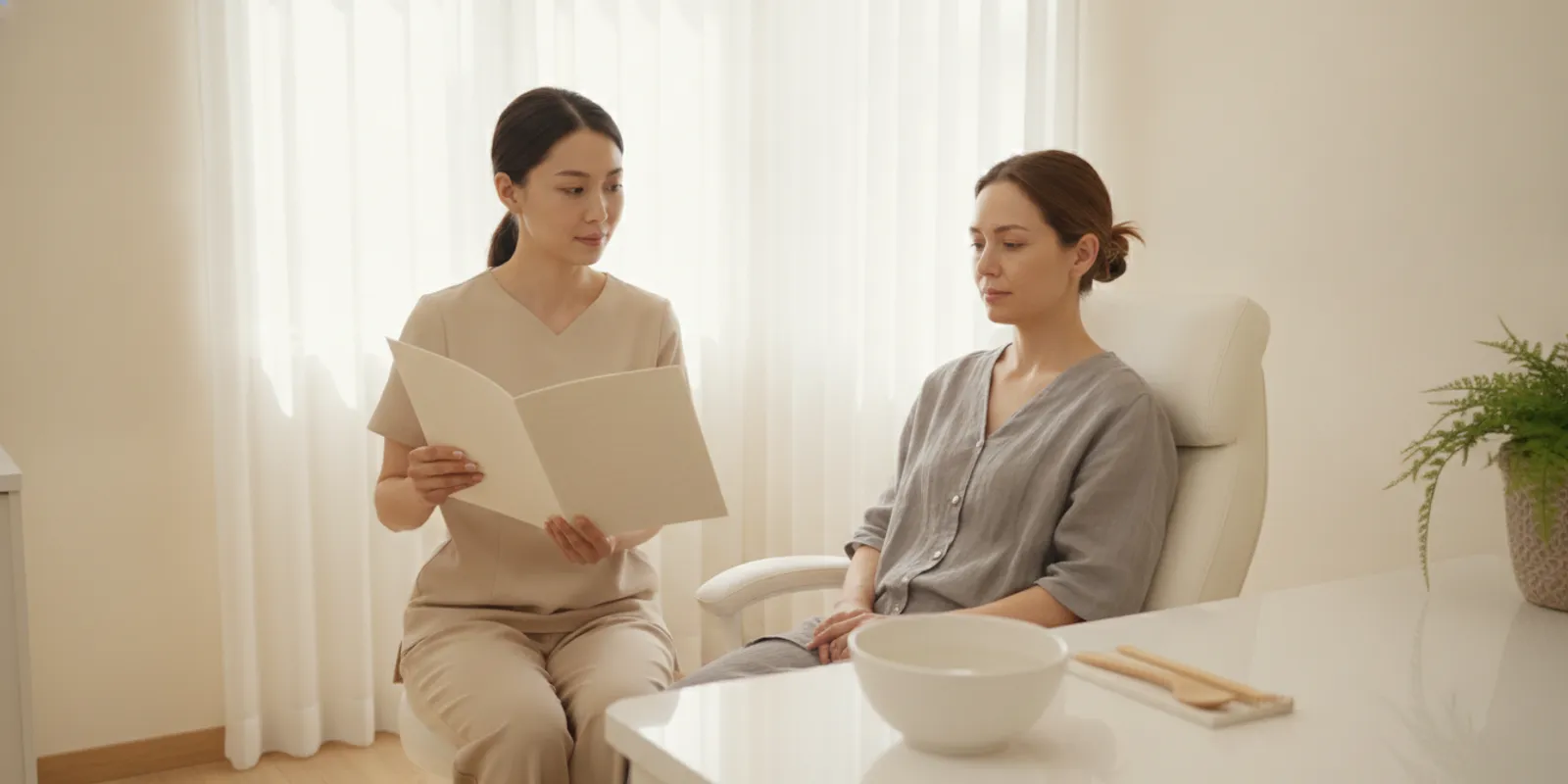
A head spa consultation protocol helps a practitioner understand a client's goals, note relevant preferences, and decide whether a service fits the client's needs and the practitioner's scope. It is a service-planning conversation, not a diagnosis, and it should end with a clear plan the client understands and accepts.
Ask about professional training
Why should every head spa session begin with a scalp consultation?
A consultation gives the practitioner context that cannot be gathered by looking at the scalp alone. The client may have a comfort concern, a recent change in routine, a preferred pressure level, or a reason to avoid certain products. Asking first helps prevent assumptions and makes the service more considered.
It also creates a useful baseline across visits. Without consistent notes, details can be lost or remembered differently. A brief record of the client's words and the practitioner's observations makes the next conversation more precise. This is particularly useful when the client is comparing experiences over time or when a different practitioner sees them.
The boundary matters: the consultation supports service planning; it does not identify a medical cause. Practitioners should stay within their training and applicable scope. When a client describes a significant, persistent, or unexplained change, or an observation raises concern, do not try to name the cause. Pause or adjust the service as appropriate and recommend that the client consult a physician or dermatologist.
For a broader foundation in education, read the Head Spa Certification and Professional Training overview. It provides context for building a professional service workflow. The online head spa training program is another resource for professionals planning their education.
What does the five-point scalp assessment framework cover?
A repeatable framework keeps the consultation focused. It is not a clinical scoring system or a checklist for diagnosis. Use it to organize questions and neutral observations, then adapt the discussion to the client's goal and the service under consideration.
- Client goal. Ask what the client wants from the visit. They may want a comfortable cleanse, a relaxing service, or help choosing among service options. An open question such as “What would make today's visit feel worthwhile?” invites a useful answer. Record the client's words instead of translating them into a claim about a condition.
- Reported comfort and changes. Ask whether the client has noticed a change in comfort or appearance, when they first noticed it, and whether anything seems to affect it. Keep the language neutral. Avoid leading questions that suggest a cause or steer the client toward an explanation.
- Relevant service history. Ask about recent hair or scalp services, products used at home, and sensitivities or preferences the client wants you to know. Request only information relevant to service planning. Do not collect unnecessary personal or medical details.
- Visible surface observations. With permission, part the hair as appropriate and look across the accessible scalp. Describe what is visible in plain terms, such as whether the surface appears oily or dry, whether flaking is visible, or whether an area looks red. Keep client-reported sensitivity separate from what you see. Do not apply a medical label.
- Comfort, consent, and service fit. Confirm the client's comfort with touch, pressure, water, and planned steps. Ask whether there are areas they prefer you to avoid. Consider whether the requested service fits the client's preferences and your training. If it does not, explain the limitation and discuss pausing, an alternative within scope, or referral.
Keep the assessment conversational rather than turning it into an interrogation. Explain why you are asking, ask one question at a time, and reflect back the client's answer. For example: “You mentioned that the area near your part has felt tight this week. I will note that and keep the pressure gentle. Please tell me if anything feels uncomfortable, and I will stop.” This confirms understanding without promising an outcome.
Before mapping the consultation to a service, review the steps described in the HeadSpa service overview and the Locs Detox experience. A practitioner can also direct a client who wants appointment details to the HeadSpa frequently asked questions.
How should you document scalp observations across visits?
Good notes are factual, brief, and useful to the next practitioner. Separate what the client reports from what you observe. Use the client's own words for concerns where possible, and do not turn an observation into a diagnosis or an assumed cause.
A practical record can include the date, the client's stated goal, relevant preferences or sensitivities, areas discussed, visible observations in plain language, the service plan and modifications, and the client's feedback during or after the visit. If you recommend a referral, record that recommendation without speculating about what a clinician may find.
| Record area | Useful entry | Avoid |
|---|---|---|
| Client report | “Client reports tightness around the crown for several days.” | Presenting a suspected cause as fact |
| Visual observation | “Light visible flaking along the part.” | Assigning a condition name |
| Service adjustment | “Used lighter pressure at client's request; checked comfort during rinse.” | Claiming the change will resolve a concern |
| Next step | “Recommended a dermatologist consultation about a persistent change.” | Predicting a diagnosis or outcome |
Use the business's approved record system and follow its privacy, retention, and access policies. Keep sensitive information out of informal notes and share client details only in the appropriate service context. If photographs are part of the studio's process, obtain consent and follow applicable policies before taking or storing them. A photograph should supplement clear notes, not replace them.
Consistency matters more than elaborate terminology. Agree as a team on plain descriptors for reported sensitivity or visible flaking. Periodically review sample notes, remove ambiguous language, and check that each entry supports a practical service decision. A note should make it easy to answer: what did the client ask for, what was observed, what was agreed, and what should be remembered next time?
A simple sequence can make documentation more reliable. First write the client's words in quotation marks when a phrase is important. Next, add a separate observation sentence. Then record the plan and any consent or comfort adjustment. For example, “Client reports sensitivity near the left temple when brushing. Light redness visible at the hairline. Client agreed to avoid direct work in that area today.” These are separate pieces of information, not a diagnosis.
How do you match consultation findings to an appropriate service protocol?
Begin with the client's goal and the boundaries of the service, not with a product or add-on. The plan should be clear to the client and tied to what the practitioner is trained to provide. Ask three questions: Is the request within scope? Is there a concern that calls for a pause or modification? Does the proposed service match what the client is seeking?
- Proceed as planned when the client understands the service, has no relevant concern that conflicts with it, and agrees to the steps and comfort preferences.
- Modify the approach when a comfort adjustment is within the service protocol, such as lighter pressure or avoiding an area. Explain the change before starting and check in during the service.
- Pause and clarify when an answer is unclear, the client is uncertain about consent, or what you observe appears outside what the service can appropriately address. Do not continue simply to preserve the appointment plan.
- Recommend medical guidance when a concern is significant, persistent, unexplained, or uncertain. Recommend a physician or dermatologist rather than trying to name or manage the issue.
A scalp-focused service may support cleansing and comfort as part of a personal care appointment. It should not be presented as a solution for medical hair loss or a scalp disorder. If asked whether a service can address a health concern, state that it is not a substitute for medical evaluation and suggest professional medical guidance.
Use service descriptions to explain what is included without adding unsupported claims. Review the HeadSpa Luxe information or, when relevant to the client's request, the JetPeel service details. Do not assume that every service is offered in every market; check the locations information for local availability.
For a practitioner establishing a broader system, a consultation template can standardize the minimum questions while leaving room for individual needs. It should prompt the practitioner to record the goal, relevant history, observation, consent and comfort preferences, plan, and any referral recommendation. It should not force a particular service choice or imply that a form can establish a clinical conclusion.
How can you explain findings without alarming the client?
Use observations, not labels. “I can see a little flaking near the part” is more precise than naming a condition. Pair the observation with a neutral next step: “Would you like me to avoid that area today?” or “Because this is a change you have noticed, it would be sensible to ask a dermatologist.” Do not minimize a concern or reassure the client that it is harmless when you cannot know that.
A calm explanation can follow three steps:
- Reflect the report: “You said this area has felt more sensitive recently.”
- State the observation or limit: “I can see some redness, but I cannot determine its cause.”
- Offer a clear next step: “I recommend getting guidance from a dermatologist before we work directly on this area.”
Then give the client room to respond. Confirm whether they want to proceed with an adjusted service, reschedule, or stop. Consent continues throughout the appointment, so check in if the client reports discomfort. Do not pressure the client to accept an add-on or continue when uncertain.
When a client asks a question outside your scope, a direct answer is more useful than a vague reassurance. You might say, “I can explain the service and what I observe, but I cannot identify the cause. A physician or dermatologist can assess that concern.” This is clear, respectful, and does not leave the client guessing about your role.
Professional language can be warm without becoming promotional. Avoid promises such as “this will fix it,” comparisons that imply a medical outcome, or statements about what the client “must” have. State what the service includes, what you observe, and where your expertise ends. For more context about Sage and its service setting, see about The Sage HeadSpa.
These boundaries align with the general role of cosmetology and salon services as distinct from medical evaluation. For regulatory context, the U.S. Food and Drug Administration explains the distinction between cosmetics and drugs, including intended use in determining classification: FDA: Cosmetics and U.S. Law. This reference supports careful language about cosmetic services; practitioners should also follow the rules of their state board and applicable licensing authority.
Practitioners seeking help planning education can review the hands-on training program or contact the team with a training question.
Discuss professional training options
Frequently Asked Questions
How long should a head spa consultation take?
Allow enough time to understand the client's goal, ask relevant service-planning questions, observe with consent, and explain the plan. The appropriate time depends on the service and the client. Do not rush through a concern to meet a fixed time target.
Should practitioners diagnose scalp conditions?
No. A head spa consultation supports service planning. Describe client reports and visible observations in neutral terms, stay within your scope, and refer health concerns to a physician or dermatologist.
What should you do if a client reports sudden or persistent hair loss?
Do not promise that a head spa service will address it or suggest a cause. Recommend that the client speak with a physician or dermatologist, especially when the change is significant, persistent, or concerning. Proceed only when the service is appropriate and the client gives informed consent.
Can you use the same consultation form for every client?
A consistent form can capture core information, but the conversation should still reflect each client's goals and preferences. Ask only relevant questions, explain why you need the information, and follow the business's privacy procedures.
A consistent consultation centers the client's goals, records observations accurately, and keeps service recommendations within professional scope.
Related Articles

Scalp Treatment Cost: Is a Professional Service Worth It vs DIY? | Professional Scalp Treatment Cost

Scalp Analysis: What a Professional Assessment Reveals About Your Hair Health
