

· Emily Condle
How to Add Head Spa Services to Your Salon: Equipment and Product ROI Guide
Plan a head spa service line with an equipment checklist, product and pricing considerations, and a practical framework for estimating payback before launch.
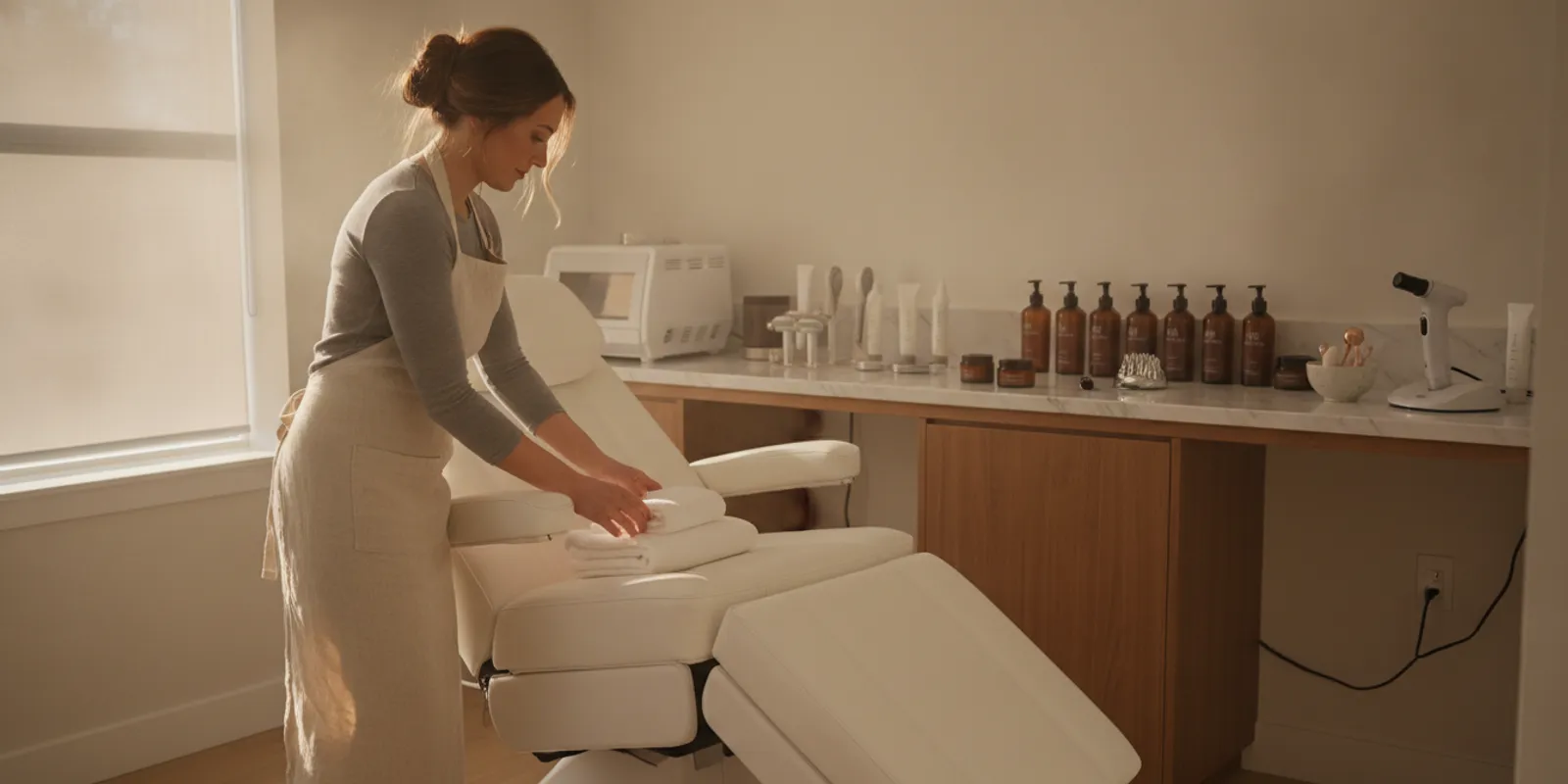
To add head spa services to your salon, define the treatment first, then match the room, equipment, products, training, and pricing to the service you can deliver consistently. A head spa service line is a planned appointment workflow, not simply a chair and a steamer. If you are weighing training alongside a capital investment, begin with our head spa certification and professional training guide.
Explore professional head spa training
What equipment does a head spa require to get started?
A salon generally needs a comfortable treatment surface suited to the service, cleanable tools, appropriate sanitation supplies, linens, and an organized product station. Wet services also require a workable water and drainage plan. The exact setup depends on the treatment sequence, premises, license, and local requirements.
Start by writing the service sequence before comparing equipment. Map consultation, scalp observation, cleansing, product or water application, massage, rinsing, conditioning, and finishing. For every step, note the client position, practitioner movement, tools, utilities, and supplies it needs. This turns a vague shopping list into a room plan. It also reveals if a basin, storage shelf, towel warmer, or electrical outlet is in the wrong place before you buy.
- Client support: Choose a chair, bed, or table that supports the planned position and lets the client remain comfortable throughout the appointment.
- Water management: Confirm hot and cold water access, drainage, splash control, and the route for wet linens. Ask whether installation requires a qualified contractor.
- Tools and sanitation: List reusable and disposable implements, cleaning and disinfection steps, and separate places for clean and used items.
- Storage: Keep frequently used products and towels close at hand without blocking movement or the client's access.
- Utilities and safe use: Check electrical capacity, ventilation, cable placement, equipment directions, and maintenance before using powered tools.
Local rules differ. The Texas Department of Licensing and Regulation facilities and equipment information concerns schools, so it is not a universal salon checklist. Check the rules that apply to your own establishment and license, and ask the licensing authority when a service or device is unclear.
Walk the room as if you were delivering a real appointment. Can the practitioner reach products without leaning across the client? Can a clean towel be retrieved without crossing the used-linen path? Is there space to turn over the room between clients? A scaled floor sketch, even a simple one with measurements, can expose these practical constraints earlier than a vendor brochure will.
How should you budget for chairs, steamers, tools, and inventory?
There is no single startup figure that fits every salon. Existing plumbing, room size, equipment condition, service menu, and local requirements all affect the investment. Build a project budget from written quotes and include installation and recurring operating costs rather than comparing purchase prices alone.
| Investment area | What to assess | Planning question |
|---|---|---|
| Treatment chair or table | Positioning, adjustability, comfort, footprint, cleanable surfaces | Will it support the full sequence and fit through the suite access? |
| Basin and plumbing | Water access, drainage, installation, splash control | Does this room need construction or a qualified installer? |
| Steamer or powered tools | Manufacturer directions, electrical needs, maintenance | What are installation, upkeep, and replacement costs? |
| Linens and sanitation supplies | Turnover volume, laundering, storage, disinfectants | What is the recurring cost per completed appointment? |
| Backbar products | Protocol fit, unit size, shelf life, reorder lead time | What quantity supports a measured pilot without overstocking? |
| Training and launch | Practice time, service timing, booking setup, launch materials | How many staff hours are needed before the first booking? |
Ask vendors for total installed cost, warranty terms, access to repairs, replacement-part availability, and a maintenance schedule. Clarify delivery, assembly, electrical work, and whether the equipment can be serviced locally. Review manuals before purchase; some jurisdictions specify what documentation must be available on site. Keep a contingency informed by contractor advice or a real quote, not by an unsupported promise that a project can be done cheaply.
Stage purchases around decisions that reduce uncertainty. First define the core service and confirm room and regulatory requirements. Next obtain installation and equipment quotes. Then buy essential items and practice the protocol. Optional technology can wait until you can explain which service step it supports, how it affects appointment length, and whether clients will be offered it as part of a clearly defined service.
Consider a salon with an existing shampoo area and a separate suite. The shampoo bowl may support rinsing, but it does not automatically solve client positioning, wet-linen storage, privacy, or room turnover. Compare the current room with the complete workflow, not with one piece of equipment in isolation. If the service depends on a particular reclined position, test that position and movement with the actual furniture before committing to a menu description.
How do Milbon and Circadia products fit into the investment?
Product selection should follow the protocol and the clients you intend to serve, not a goal of filling shelves. The Sage HeadSpa uses Milbon and Circadia products. An independent salon can evaluate any line by reviewing intended use, directions, training resources, unit size, cost per application, minimum order, shelf life, and supplier support.
Estimate product cost from measured use. Divide the package price by the number of applications it yields under your documented protocol, then include disposables used with it. Test the estimate across several practice appointments. Hair length, density, and the steps selected may change how much product is used, so a single demonstration is not a reliable usage standard.
- Choose a concise set of products that covers the planned cleansing, conditioning, and finishing steps.
- Record quantities and application directions so different practitioners can follow the same process.
- Track waste, opened inventory, and actual usage during the pilot instead of relying on assumptions.
- Set reorder points using observed consumption and the supplier's lead time.
- Describe product use accurately and avoid medical claims or guaranteed hair-growth promises.
For example, if one bottle yields 24 measured applications in practice, divide its purchase cost by 24 to estimate the product portion of each appointment. Recheck that figure after the first month. If the observed yield is lower, identify whether the protocol, dispensing method, or client mix explains the difference before revising the service price.
Product expense is only one part of the service economics. Include practitioner time, laundry, disposables, payment fees, room occupancy, and training or booking costs. A premium product alone does not justify a particular price. Clients should understand what their appointment includes, and the price should cover the costs of delivering it.
How should you price head spa services for your market?
Begin with the contribution you need per appointment, then compare that figure with the local market and the complete service experience. Copying another salon's price does not account for your staff compensation, treatment length, products, rent, or location. A clear cost model makes those assumptions visible.
Estimate variable cost per visit: product, laundry, disposables, payment processing, and service labor. Add a fair share of fixed costs such as rent, utilities, insurance, software, and equipment financing. The remaining amount must also support taxes, owner compensation, and profit. If the price implied by the model seems too high for your market, review the protocol, duration, costs, and experience rather than relying on optimistic assumptions.
Keep the first menu easy to understand. One core service with a small number of clearly described upgrades is simpler to explain and schedule than overlapping options. State what is included, appointment length, preparation, and aftercare. A service that takes 60 minutes in the treatment room may need additional turnover time; account for both when deciding how many appointments fit into a day.
As one reference point, The Sage HeadSpa lists HeadSpa at $175, HeadSpa Luxe at $225, and HeadSpa Luxe with LED and Jelly Mask at $250. These are Sage prices, not a recommended rate for every salon. Use them only as examples of differentiated service levels, alongside your own cost model and local comparison. See the Sage treatment overview and HeadSpa Luxe information for examples of how services may be distinguished.
Before publishing prices, test the menu description with someone unfamiliar with the treatment. Can they explain the difference between the core service and an upgrade? Do they know how long to reserve and what is included? Clear answers reduce scheduling mismatches and help staff recommend options without promising a result the service cannot guarantee.
How can you estimate whether the investment will pay back?
Payback depends on startup investment, contribution per completed appointment, and realistic booking volume. Use your own assumptions rather than relying on a universal return promise. A basic calculation can clarify the size of the hurdle.
Basic break-even appointments = startup investment ÷ contribution per completed appointment. Contribution is service price minus direct costs such as product, disposables, laundry, and service labor. If the initial investment is $8,000 and contribution is $80 per appointment, the basic calculation is 100 completed appointments to cover that outlay. This illustration excludes fixed overhead, taxes, and other business costs; it is not a forecast.
Now test whether the schedule can support the number. Suppose a visit takes 75 minutes including turnover. Multiply available weekly treatment hours by the realistic appointment capacity, leaving room for existing services, breaks, cancellations, and cleaning. If only a few blocks are available, the break-even count may take longer to reach than the simple division suggests.
Build three scenarios in a spreadsheet: conservative, expected, and stronger demand. For each, state bookings per week, average price, direct costs, cancellation assumptions, and repeat visits. Keep the inputs separate from the formula so you can replace estimates with observed numbers. Do not treat inquiries or social engagement as completed appointments.
Review the pilot monthly. Track completed visits, average ticket, product usage, time per appointment, rebooking, cancellations, and client feedback. If demand is below plan, first check whether the service is visible, bookable, and clearly described, and whether trained staff have workable availability. Avoid ordering more inventory or equipment until you understand the constraint. The HeadSpa FAQ provides examples of common client questions, and the scalp wellness article library offers additional educational context.
What is a practical launch checklist for a salon?
- Confirm the service scope. Define who will provide it, what each appointment includes, and what falls outside the practitioner's professional scope.
- Check local rules. Confirm licensing, facility, sanitation, plumbing, and equipment requirements with the relevant authorities before construction or purchase.
- Map and test the room. Measure the footprint and plan client access, practitioner movement, storage, clean supplies, used linens, and turnover. Rehearse the sequence in the actual space.
- Build the full budget. Collect equipment and installation quotes, estimate recurring supplies, and include training and staff time.
- Train and document. Create a repeatable protocol, practice timing, and keep manufacturer directions and sanitation procedures accessible.
- Run practice appointments. Record actual duration and product quantities, then adjust the sequence before opening the calendar.
- Set menu and booking details. Explain inclusions, duration, price, preparation, and scheduling buffers in plain language.
- Launch as a measured pilot. Begin with manageable inventory, collect feedback, and compare actual results with the model.
Training can help turn an equipment plan into a consistent workflow. Compare Sage's hands-on training with its online training information to understand the formats. Sage's hands-on program is described as a one-day training for licensed beauty professionals and includes its signature protocol, professional toolkit, and access to the HeadSpa Blueprint online course. Confirm current details directly before deciding whether a format fits your needs.
For a local example of a service business, review the Tampa, Florida location page; Sage also serves other markets listed on its locations page. Local demand, competition, staffing, and facility constraints still need to be assessed for your own salon. A model that works in one market should not be treated as a prediction for another.
Frequently Asked Questions
Can I start with existing salon equipment?
Possibly, if it supports the complete service safely and comfortably and meets applicable requirements. Map every treatment step, test the existing setup, and confirm local rules before deciding that new equipment is unnecessary.
How much should I invest to add a head spa service?
There is no single suitable amount. Plumbing, room changes, equipment, training, and initial inventory vary. Obtain written quotes for your specific space, then estimate ongoing costs before setting a launch date.
How many appointments are needed to break even?
Divide the startup investment by contribution per completed appointment after direct costs. Treat this as a basic estimate, then include fixed overhead and taxes and check whether available appointment hours support the required volume.
Do I need special training?
Training needs depend on the service, practitioner license, and local rules. Ensure the provider is qualified for the work and follows product and equipment directions. Confirm scope or licensing questions with the appropriate state board.
Ask about professional head spa training
Make the investment decision with a clear plan
A sustainable head spa service line starts with a defined protocol and a room that supports it, then builds through compliant equipment, measured product costs, prepared staff, and realistic pricing. Validate the numbers with quotes and a small pilot before expanding your menu or inventory.
Related Articles

A Guide to Head Spa Palm Beach Gardens, FL Services

Scalp Health Guide: The Complete Guide for Healthy Hair
