

· Emily Condle
What to Expect at a Head Spa First Visit
Learn what to expect at a head spa first visit, from consultation and cleansing to aftercare. Get practical tips for a calm, comfortable appointment.

Your first head spa appointment can feel much easier when you know how the visit is likely to unfold. You will have time to settle in and talk through what you have noticed about your scalp. The specialist can then shape the experience around your comfort and needs.
Contact The Sage HeadSpa with first-visit questions
Knowing what to expect at a head spa first visit can help you arrive relaxed. Most appointments begin with check-in and a consultation, then move through scalp-focused cleansing, massage, conditioning, and simple aftercare guidance. Exact steps vary by location and service.
This is intentional scalp care and restoration, not simply a quick wash. If you want a broader explanation of the tradition, treatment options, and booking considerations, read The Japanese Head Spa Experience guide. This article focuses on the practical details that matter when you are preparing for your first appointment.
What to expect at a head spa first visit from the moment you walk in
Plan to arrive a few minutes early so you can enter the experience without feeling rushed. Around 10 minutes is a practical target for a first visit, but it is guidance rather than a strict rule. Use the extra time to find the location, complete any intake steps, and collect your thoughts about what you want from the appointment.
Check-in and settling in
After check-in, you will have a moment to settle into the spa environment before hands-on care begins. Wear clothing that feels comfortable while you recline, and let the team know if you have immediate comfort needs. Small details can affect how restorative the appointment feels.
If the room temperature, head position, water temperature, or pressure does not feel right, say so. A head spa visit should feel soothing rather than difficult to tolerate. Speaking up gives the specialist a chance to adjust the experience while you remain relaxed.
A conversation before hands-on care
Your first visit typically begins with a consultation about your scalp, hair, routine, and goals. This is a conversation, not a test. Be ready to describe what you have noticed, such as dryness, oiliness, buildup, sensitivity, tightness, or changes in how your hair feels.
You can also mention recent color services, extensions, protective styles, oils, dry shampoo, gels, sprays, or other products. You do not need technical vocabulary or a perfect explanation. A clear description of your experience gives the specialist useful context.
What happens before the treatment itself
Once your questions and concerns have been discussed, the appointment can move into its structured sequence. Head spa sessions commonly layer consultation, scalp analysis, cleansing, massage, and conditioning. Some services may also include exfoliation, hydrotherapy, facial care, or other additions.
The consultation and assessment come first so the hands-on portion has context. That keeps the visit from feeling like a one-size-fits-all routine. If you are unsure what to do before your appointment, review these head spa preparation tips before you leave home.
The scalp consultation: what the specialist will ask and assess
A first visit begins with a conversation about what you have noticed and what you hope to feel afterward. The specialist wants to understand your starting point before selecting products or adjusting the pace of care. This is also your opportunity to ask questions before treatment begins.
Your scalp concerns and everyday experience
Expect questions about the concerns that brought you in. You might mention dryness, oiliness, visible buildup, sensitivity, flaking, tenderness, or a feeling of tightness. If a concern appears at a certain time, describe the pattern. For example, you might notice oiliness after exercise or tightness after using a particular product.
Scalp buildup can include natural oil, dead skin, dirt, sweat, and product residue. The CDC explains general hair and scalp hygiene, including the value of choosing products that fit your hair type. A head spa consultation is not a medical diagnosis. It is a practical conversation that helps the specialist understand your care needs.
Hair history, products, and sensitivities
You may be asked how often you wash your hair and which products you use. Share information about shampoo, conditioner, oils, dry shampoo, styling products, color treatments, extensions, and protective styles when relevant. It is also important to identify known allergies, sensitivities, tender areas, or products that have caused discomfort.
Be direct if you are uncertain about an ingredient or step. You can ask what a product is intended to do, where it will be used, and how the specialist will adjust the treatment if your scalp feels uncomfortable. The more useful context you provide, the easier it is to keep the appointment personalized.
What the specialist observes and how care is customized
The visual assessment may consider the scalp's overall appearance, visible oil or dryness, areas of buildup, and the condition of the hair. It gives the specialist a starting point for choosing the intensity of cleansing, the products used, and how massage or other steps are approached.
A scalp-first approach treats the scalp as an extension of the skin rather than focusing only on the visible hair lengths. At The Sage HeadSpa, licensed estheticians and cosmetologists use the consultation to guide a thoughtful service. Exact details can vary by location, treatment, hair type, and what the specialist observes.
- Share your main concern. Explain what you have noticed and what you want from the visit.
- Describe your routine. Mention washing habits, products, styling, color, and protective styles.
- Identify sensitivities. Tell the specialist about allergies, tenderness, or past discomfort.
- Ask for adjustments. Let the team know if you want a lighter touch, different temperature, or more explanation.
That exchange is an important part of what to expect at a head spa first visit. It helps turn a relaxing appointment into intentional scalp care shaped around you.
Step-by-step breakdown of a typical head spa treatment
After the consultation, the treatment follows a thoughtful sequence for your scalp and the overall experience. A typical service may combine analysis, cleansing, massage, hydrotherapy, and conditioning. The order can vary by location, service, hair type, and what your specialist observes.
1. Scalp analysis and preparation
Your specialist begins by looking more closely at your scalp and hair. This may include observing areas of dryness, oiliness, visible buildup, or sensitivity while considering what you shared during the consultation. The goal is to establish a comfortable starting point for the rest of the service.
Mention recent product use, discomfort, or sensitivities before this stage begins. The information can help your specialist decide how gentle or intensive each step should be. It also gives you a natural opening to ask what will happen next.
2. Cleansing and exfoliation when appropriate
The cleansing stage focuses on the scalp, not only the visible lengths of the hair. Natural oil, dead skin, sweat, dirt, and product residue can accumulate over time. A specialized cleansing process helps lift that material while keeping your comfort in view.
If buildup is present and the specialist considers it suitable, exfoliation may be included. It is not automatically necessary for every person or every visit. The approach should account for sensitivity and the condition of the scalp. If your skin feels irritated, tell your specialist before this stage continues.
3. Massage, rinse, and hydrotherapy
After cleansing, the service may move into an extended scalp massage. Pressure is adapted to your comfort, and you can request a lighter touch or a change in pressure at any point. Massage should feel soothing, not painful.
A rinse or hydrotherapy stage may follow, depending on the service. Water helps remove loosened residue and product. The movement and temperature can also add to the calming sensory experience. Equipment and methods differ among locations, so your session may not look identical to a friend's appointment or an online video.
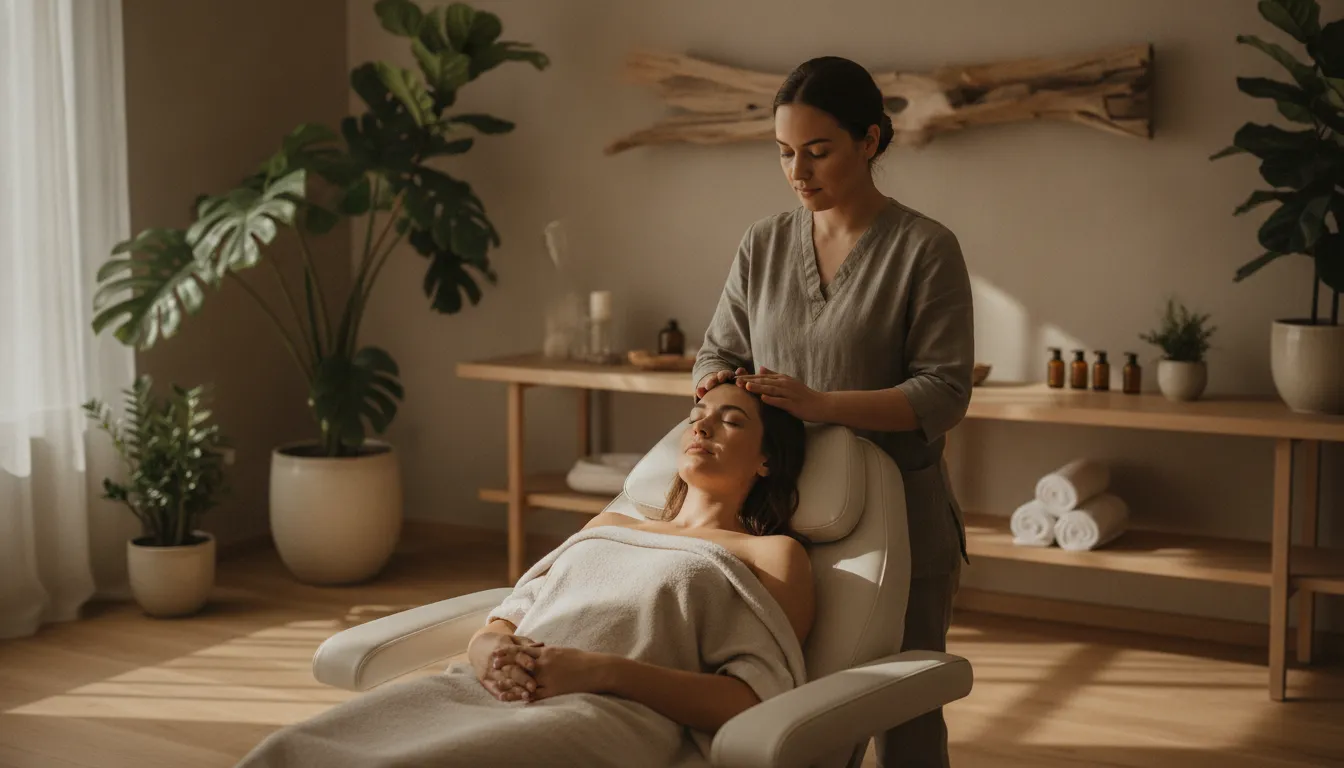
4. Conditioning and the final finish
Conditioning therapy is commonly included to support the hair after cleansing. The product and application may be adjusted for your hair type and the service provided. Proper hair care includes choosing shampoo and conditioner appropriate for your hair type, and your specialist can explain what feels suitable for your routine.
Finally, your hair is rinsed as needed and dried or finished according to the service and your preferences. You may leave with a clean, refreshed scalp and polished hair, but the exact look depends on your hair and the location's process. Think of the appointment as a personalized sequence, not a guaranteed formula.
- Scalp analysis and treatment preparation.
- Deep cleansing, with exfoliation if appropriate.
- Scalp massage and relaxation-focused techniques.
- Rinse or hydrotherapy, depending on the service.
- Conditioning, drying, and the final finish.
For a closer look at the treatment menu, explore the signature head spa treatment. If you are considering a facial and scalp combination, the LED edition head spa is another service page to review. Availability can vary by location.
Ask about choosing the right first-visit service
What your scalp and hair feel like immediately after
When the treatment is complete, the first thing you may notice is how clean and refreshed your scalp feels. A thorough cleanse can lift away everyday oil, sweat, and product residue, leaving the roots feeling lighter rather than coated. That sensation is different from simply washing your hair at home because the appointment also includes focused scalp care and time to unwind.
A refreshed scalp and a quieter mind
Your scalp may feel cool, comfortable, or gently stimulated after cleansing and massage. Some guests notice less tightness after relaxing their jaw, neck, and shoulders during the service. Others mainly notice the mental shift: the room is quiet, the pace is unhurried, and the massage creates space to settle.
These are common relaxation experiences, not signs that a treatment has corrected a medical condition. If you have persistent itching, pain, sores, sudden shedding, or another health concern, speak with an appropriate medical professional. A head spa can be part of a personal wellness routine, but it is not a substitute for medical care.
How the finish can vary
Depending on your hair type, the products used, and the service selected, your hair may feel soft, smooth, airy, or more moisturized. Hair that tends to be dry may feel conditioned, while fine hair may feel especially light at the roots. Your result is not meant to look identical to another guest's.
The specialist may adapt cleansing, conditioning, and finishing choices to your scalp and hair needs. If you have a particular event or styling plan afterward, mention it early. This helps the team set realistic expectations about drying and finishing.
What to notice before you leave
Take a moment to notice how your scalp and hair feel, then share your observations. Clear communication helps your specialist understand what felt most comfortable and what you would prefer to adjust during a future visit. It also gives you a practical starting point for caring for your hair at home.
- Check your comfort. Notice whether your scalp feels clean, balanced, tender, or refreshed.
- Notice the hair finish. Observe how your hair feels at the roots and through the lengths.
- Ask a maintenance question. Learn which cleansing and conditioning habits fit your hair type.
- Confirm aftercare. Repeat any individualized guidance before you leave.
Aftercare does not need to be complicated. Follow the recommendations provided for your hair and scalp, and avoid assuming that a stronger product or more frequent washing is automatically better. You can review the CDC's general hair and scalp hygiene guidance, while remembering that your specialist's recommendations should account for your service and hair texture.
First-visit tips: what to wear, what to bring, what to skip
A little preparation can make your first appointment feel even more restorative. You do not need a special outfit or an elaborate routine. The goal is to arrive comfortable, ready to communicate, and free from anything that could make the scalp-care portion of the visit less convenient.
These suggestions are practical rather than rigid requirements. If your selected location sends specific instructions, follow those first.
| Area | Do | Skip |
|---|---|---|
| Clothing | Wear comfortable clothing that lets you settle back and relax. Choose layers if you tend to feel warm or cool. | Skip anything restrictive, unusually delicate, or difficult to adjust while you are reclining. |
| Arrival | Arrive about 10 minutes early so you have time for check-in, a calm transition, and questions. | Skip rushing in at the appointment time. A hurried arrival can make it harder to settle in. |
| Hair and products | Come with your hair in a manageable state and tell your specialist about recent products or treatments. | If possible, skip heavy styling products. Excess product can add buildup and make scalp assessment less straightforward. |
| Concerns | Mention dryness, oiliness, buildup, sensitivity, or anything that feels uncomfortable. | Do not assume a concern is too minor to mention, and do not feel pressure to diagnose it yourself. |
| Accessories | Bring only what you need, and remove bulky clips, tight styles, or jewelry that could affect comfort. | Skip large accessories that press against the scalp or neck while you are resting. |
| Plans afterward | Leave enough flexibility to enjoy the clean, relaxed feeling without immediately hurrying away. | Skip a demanding plan if you want to preserve the fresh finish and calm mood. |
A simple arrival checklist
- Arrive early. Give yourself time for check-in and a calm transition.
- Bring useful information. Be ready to describe scalp concerns, sensitivities, and relevant product use.
- Dress for comfort. Wear layers and keep bulky accessories easy to remove.
- Plan the finish. Allow time afterward for the drying or finishing care included with your service.
- Keep questions open. Write down anything you want to ask about your routine or future care.
For a fuller preparation and aftercare overview, read what to do before and after a head spa. Knowing what to expect at a head spa first visit is less about following a perfect routine and more about giving yourself space to communicate.
How knowing what to expect at a head spa first visit supports a calmer appointment
First-visit questions are normal. You may be comparing locations, wondering which service fits your goals, or deciding whether your scalp concerns are worth mentioning. The most useful preparation is not memorizing every step. It is understanding that the appointment has a flexible structure and that your comfort matters throughout it.
The Sage HeadSpa has locations serving guests in markets including Alpharetta, Charlotte, Brentwood, Tampa, Jacksonville, Winter Park, Palm Beach Gardens, Southlake, and Delray Beach. Review the location page that is most convenient for you before reaching out with questions.
If you are comparing treatment types, start with the difference between a head spa and a scalp treatment. If your main question is how often visits may fit your routine, read the guide to head spa treatment frequency. Those resources cover different decisions, while this article stays focused on the first appointment itself.
Connect with The Sage HeadSpa about your first visit
Frequently Asked Questions
Do I need to wash my hair before a head spa appointment?
Usually, no. The treatment includes focused scalp cleansing, so arriving with your normal hair is appropriate. If possible, skip heavy styling products beforehand so your specialist can assess your scalp and work comfortably. Follow any instructions provided by your selected location.
How should I prepare for my first head spa visit?
Arrive a few minutes early so you have time to settle in and share your goals or scalp concerns. Wear comfortable clothing, remove bulky accessories, and mention sensitivities, relevant product history, or areas that feel dry, oily, tender, or congested during your consultation.
What happens during a head spa treatment?
Your visit typically begins with a consultation and scalp assessment, followed by a personalized sequence of cleansing, massage, and conditioning care. Depending on the service and your needs, the experience may also include exfoliation or hydrotherapy. Exact steps can vary by location and treatment.
Will my hair be styled after the treatment?
Many appointments finish with drying or simple finishing care, but the final step depends on the service and location. If you have a specific need for your hair afterward, ask your specialist at the beginning so expectations are clear.
What if I have a sensitive scalp?
Tell the specialist about sensitivity, tenderness, allergies, or past product reactions before treatment begins. The team can discuss comfort adjustments and whether the selected service is appropriate for your situation. Persistent or severe symptoms should be discussed with a medical professional.
Related Articles

Scalp Facial Jacksonville FL: First-Visit Guide

Head Spa First Visit Discount: Sage Guide
