

· Emily Condle
Head Spa Cosmetologist vs Esthetician: Who Can Legally Perform Head Spa Services?
Can a cosmetologist or esthetician perform head spa services? Learn how scope-of-practice rules vary by state and what to verify before adding services.
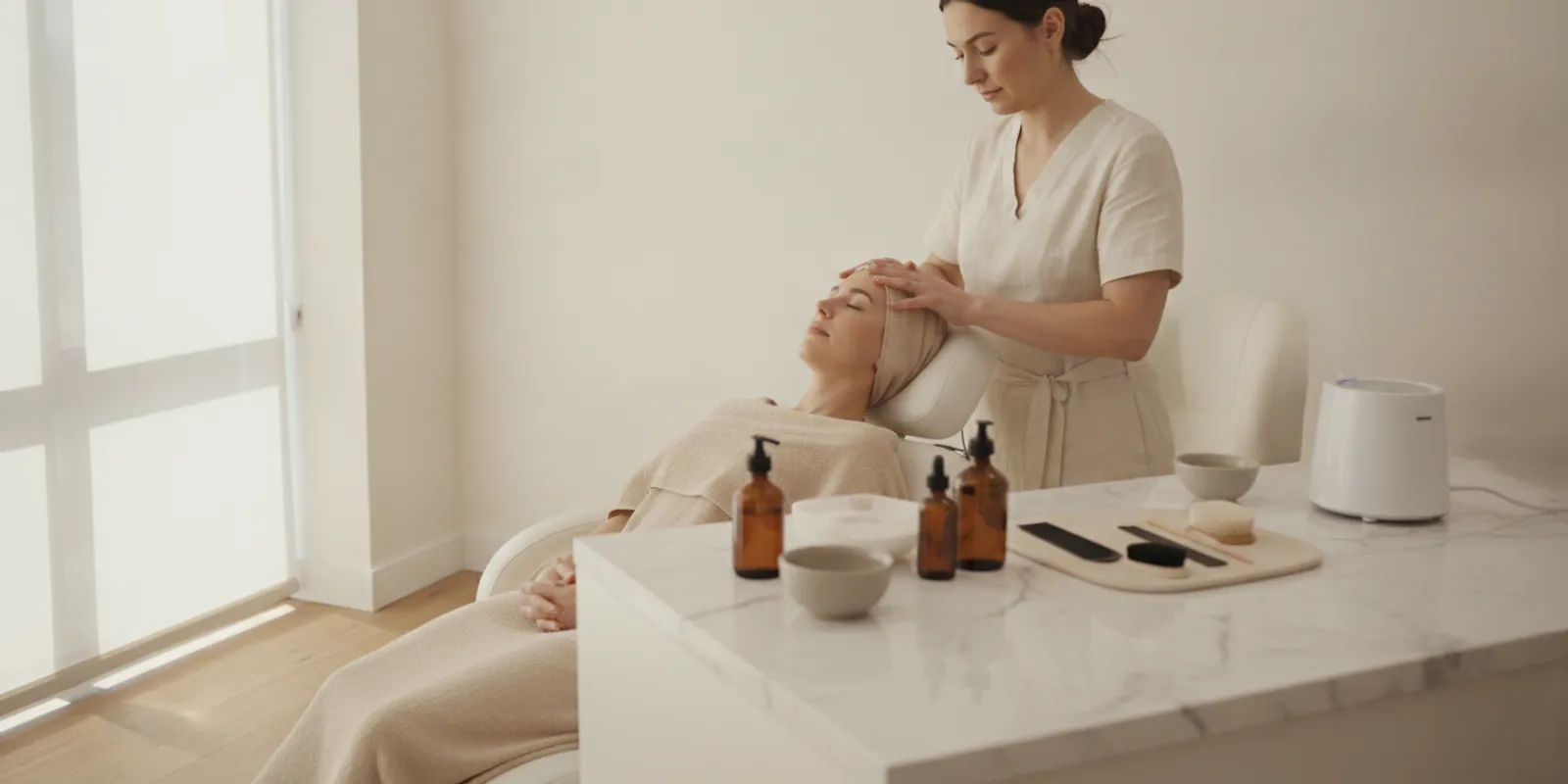
A cosmetologist may be able to perform some head spa services, but the answer depends on the exact service and state law. An esthetician’s permitted services may differ, so professionals should confirm their own license scope before offering shampooing, styling, massage, or scalp-focused treatments.
Ask about professional training
The question “can cosmetologist perform head spa” has no universal yes-or-no answer. A head spa is a service format, not a single regulated procedure. The safest way to evaluate it is to break the experience into its individual steps, then compare each step with the rules for your license and state.
This guide explains how cosmetologist and esthetician scopes may differ, what to verify with your state board, and why training does not replace licensure. For a broader professional pathway, see our guide to head spa certification and professional training.
What license do you need to perform head spa services?
There is no single “head spa license” that applies across the country. State boards regulate the activities within a service, and a treatment menu may combine steps governed by different rules. A professional must hold the license or authorization required for each activity they personally perform.
Begin by describing the service as a sequence rather than relying on its name. Write down what happens from consultation to finish. Include cleansing, conditioning, scalp massage, exfoliation, topical product application, use of equipment, and drying or styling. A relaxing presentation does not change how a regulator defines a step.
- Identify who performs each step. Separate actions carried out by the license holder from those performed by another professional.
- Record products and tools. Note whether the service uses a topical preparation, exfoliant, steam, brush, or device. Do not presume a rule covers every method.
- Check the setting. Ask whether individual licensure is enough or whether establishment authorization, supervision, or sanitation requirements also apply.
- Keep the official answer. Save the relevant regulation or written board response, with its date, for the service file.
For example, a treatment described as a scalp facial might include a skin-focused application, while another offering could include shampooing and blow-drying. Those are not necessarily the same regulated service. A professional who verifies only the broad name may miss a restriction attached to one part of the appointment.
The best first question for a regulator is concrete: “May a person holding this license perform this specific sequence, with these products and tools, in this setting?” If the answer depends on a detail, ask the detail directly. When the business changes a protocol, repeat the review for the new step.
Cosmetologist scope of practice: scalp massage and chemical application
Cosmetology rules commonly address hair and its care, but the details are state-specific. A cosmetologist should confirm whether their current license covers the particular cleansing, hair-product application, scalp manipulation, and styling steps in the proposed service. The label “head spa” does not itself establish permission.
Consider the service component by component. Shampooing may be treated differently from exfoliation. A scalp massage may have limits tied to technique or area. Applying a topical product may raise a different question from applying a chemical service. A blow-dry or finished style can also be a separate licensed activity. Do not infer permission for one of these actions from permission for another.
Use this checklist when reviewing a proposed protocol:
- Does the license authorize cleansing or shampooing in this business setting?
- What limits apply to scalp massage, pressure, or manipulation?
- Are exfoliation, chemical products, or particular devices addressed separately?
- Does the license cover drying, brushing, or styling after the treatment?
- Are there required sanitation practices, facility approvals, or supervision conditions?
California’s government head spa industry bulletin distinguishes permitted esthetic services from shampooing and blow-drying, which it says estheticians are not licensed to provide in that state. This example shows why a service should be reviewed as a set of actions. It does not determine what a cosmetologist or esthetician may do elsewhere.
Suppose a cosmetologist plans to offer a session with a cleanse, a scalp massage, a leave-on product, and a blow-dry. The useful review is not simply “head spa allowed?” Instead, check each step in the sequence, then confirm whether the combination or setting creates an additional requirement. If one portion is outside the permitted scope, the professional may need to remove it, modify it, or have it performed by someone separately authorized, subject to local rules.
Esthetician scope of practice: skin-based scalp treatments
Esthetician licensing generally centers on skin care, but permitted procedures and body areas vary by state. An esthetician considering scalp services should verify whether the rules cover the specific skin-focused techniques, products, and tools involved. A skin-care license should not be assumed to authorize hair services.
Start with the exact treatment area and technique. Is the service an application to skin, a mechanical exfoliation, a cleansing step involving hair, or a sequence that combines several actions? Ask whether the rules define the scalp as an area an esthetician may treat and whether the method or product changes the answer.
Texas provides an official scope-of-practice guide for estheticians describing services that may and may not be offered for compensation. It is a state resource, not a nationwide standard. California’s bulletin similarly identifies limits for estheticians related to shampooing and blow-drying within California. Read the rules for the state where the service will take place, rather than relying on a course, social post, or another state’s example.
For a practical review, separate a scalp service into four questions:
- Area: Does the license allow treatment of the particular skin area?
- Method: Is the planned application, massage, or exfoliation included, and are there limits?
- Products and tools: Are the product category and equipment permitted for that license?
- Hair steps: Does cleansing, rinsing, or styling introduce an activity outside the skin-care scope?
This approach also helps when a service has a hybrid description. “Scalp care” could mean a skin-focused topical application, hair cleansing, or a full sequence combining both. The professional should verify the actual actions rather than treating a broad marketing term as a legal category.
Cosmetologist and esthetician scope, side by side
The comparison below is a worksheet, not a statement that any activity is authorized in every state. Use it to identify questions for your regulator, then verify the exact license, service method, and setting.
| Service component | Cosmetologist review | Esthetician review |
|---|---|---|
| Shampooing or hair cleansing | Confirm whether it is in scope and permitted in the setting. | Do not assume authorization; check state rules. California’s bulletin says estheticians may not shampoo. |
| Scalp massage or manipulation | Check definitions and limits for the technique used. | Confirm whether the area and method are allowed. |
| Topical skin-care products | Check whether the product and application fall within the license. | Confirm permitted product, method, and treatment area. |
| Exfoliation or equipment | Verify rules for each tool and procedure. | Verify device and procedure restrictions before use. |
| Blow-drying or styling | Check hair-service scope and establishment requirements. | California’s bulletin says estheticians may not blow-dry; confirm your state’s rule. |
| Business location | Ask whether salon, suite, or establishment rules apply. | Ask the same question separately; individual licensure may not answer facility requirements. |
Use the table to build a service-by-service file, not to create a universal menu. If a protocol includes a step that is unclear, leave it out until the appropriate board or regulator clarifies the rule. A cautious review is more useful than relying on a broad promise that a course or device is “approved.”
How do state regulations vary for head spa and scalp treatment services?
States define license categories, permitted services, and establishment requirements differently. Similar terms can have distinct meanings in separate regulations. A method permitted in one state may be restricted in another, and one credential may cover only part of a multi-step service.
Use a repeatable verification process:
- Start with the official state licensing authority. Review scope pages, statutes, regulations, and current industry bulletins.
- Describe the actual method. Include steps, products, tools, treatment area, and order. Ask about the protocol, not only “head spa.”
- Ask about the business setting. Check whether a suite, salon, or establishment authorization is needed in addition to individual credentials.
- Request clarification in writing. If language is ambiguous, contact the board and keep its response with your service documentation.
- Set a review trigger. Recheck before adding a device, product, service step, or new location.
A useful written inquiry might say: “I hold a [license type] in [state]. The proposed appointment includes [ordered steps], using [products/tools], at [type of facility]. Which of these activities fall within my scope, and are there separate facility or supervision requirements?” This gives the regulator enough detail to address the real question. Avoid asking only whether “head spa” is allowed, because that term may not appear in the rule.
Keep a compliance record with the protocol version, the links or documents reviewed, the date, and any written response. If an answer is oral, record the office contacted and follow up by email if possible. Revisit the record when rules change or when the service menu changes. For a multi-state business, maintain a separate record for each state rather than copying one location’s approval to another.
Training and licensure serve different purposes. A course can teach technique, service design, and business processes, but its certificate does not replace a state license or extend a professional’s scope. The professional and business remain responsible for confirming what may be offered and who may perform each part.
How Sage training is structured for different license types
The Sage HeadSpa offers hands-on training and an online business course. Training is educational. It does not grant a state license or expand a license holder’s legal scope of practice.
Professionals should compare course content with the rules for their own license before adopting a protocol. A cosmetologist and an esthetician may need to limit or adapt different elements, depending on local rules. The participant is responsible for confirming what they may personally perform.
For the broader education pathway, read the professional training guide. You can also review the company’s service overview for general information and its frequently asked questions. These pages explain Sage offerings; they do not replace a state board’s legal guidance.
When considering an educational program, ask practical questions before enrolling: What techniques are covered? Which portions depend on the participant’s license? What materials are included? How should a protocol be adapted if a state restricts a step? Clear answers help a professional decide whether the education is relevant without confusing training with legal authorization. For questions about Sage’s professional education, use the contact page.
Frequently Asked Questions
Can a cosmetologist perform a head spa?
Possibly, depending on the state and the exact steps included. Verify cleansing, massage, product application, equipment, and styling permissions with the state licensing authority before offering the service.
Can an esthetician perform a scalp facial?
That depends on the state’s esthetician scope and how the service is performed. Check the permitted treatment area, techniques, products, and tools. Do not assume permission for skin care includes shampooing or hair styling.
Does a head spa certificate let me work outside my license?
No. A course certificate may document education, but it does not replace a state-issued license or authorize activities outside its scope. Confirm legal requirements with the regulator in your state.
Where should I check my state’s rules?
Start with the official licensing board for cosmetology and esthetics. Read its scope guidance and regulations, then ask the board directly if a particular service step remains unclear.
Contact Sage about professional training
A clear service outline and state-board confirmation help professionals build a head spa offering that respects client care and license boundaries.
Related Articles
How to Add Head Spa Services to Your Salon: Equipment and Product ROI Guide

A Guide to Head Spa Palm Beach Gardens, FL Services
